Berlin to Morocco via Poland, Prague, Austria, and Italy

Saturday, August 2, 2014

Moroccan Cooking Part 2: Bread!

Moroccan bread is one of my favorite parts of the cuisine. There are many different kinds, each with prepared and eaten at certain times and in certain ways.

The first kind I learned how to make is harcha, a pan-cooked wheat bread. It is made from semolina (like cous cous) rather than regular white flour. The semolina is mixed with oil (or melted butter) and water or milk, as well as a pinch of sugar and salt. It is then placed on a hot pan or griddle and patted into rounds about half an inch thick, in sizes varying from two inches to ten inches. It's delicious plain, hot off the grill. It's often served with butter, Moroccan fresh cream cheese, and honey.


Another delightful type is erghayef, made with mostly white flour and a little bit of semolina. It starts out like a normal bread dough, with milk, oil, water, salt, and a little baking powder - no yeast. The dough is left to rest and then formed into small balls.


These are flattened out reeaaalllyy thinly and carefully folded in thirds in both directions to create a crispy layered texture. Sometimes they are filled with spiced vegetables and bits of meat.


Then the squares are stretched out slightly before being grilled to golden brown.


Erghayef is eaten with both savory and sweet accompaniments - sometimes cheese and sliced canned beef (which for some reason is super popular here), sometimes with butter and honey, sometimes with chocolate spreads, sometimes with jam.


The most basic type is probably hobz maklah, which just means pan bread. It is made from wheat flour and yeast, and is kneaded and flattened into rounds before being cooked on the griddle.


This type is often eaten with savory dishes like soup, lentils, or meat, but might also be eaten for breakfast or a snack with butter and honey.


My faaaaavorite type of bread (actually it changes every week) is baghrir, a super light, fluffy, yeasted crepe. It is made from a thin batter of flour, semolina, water, oil, sugar, and yeast, and left to rest for 30 minutes to an hour before being cooked quickly in a frying pan. The preparation is much like a pancake, expect that you don't flip it - there is no need because there are so many bubbles that the top is cooked by the time the bottom is done.


Baghrir is almost always eaten with sweet things - butter, honey, jam, or amlou, ground almonds mixed with oil and honey. The bubbly structure makes it perfect for soaking up the sweet, buttery goodness! I can't wait to make these at home and try them with maple syrup.

These are the types of bread I've helped make, but there's a bunch more! There's erghayef in different shapes, oven-baked yeasted rounds, a type that kind of looks like spaghetti squished together in a pancake shape, basic soft white baguette-shaped loaves eaten with soup, and many more. And that's just in Tangier - every region has its own bread cultures and traditions. Being in Moroccan has given me a much deeper appreciation for the delicious culinary possibilities of bread, as well as its deep cultural and nutritional significance.

Ramadan


Ramadan, the ninth month of the Islamic calendar and a deeply significant time for Muslims, just ended. During this month, all health adults fast from before dawn to just after sunset as a way to remember God and those less fortunate than themselves. Fasting during Ramadan is one of the five pillars of Islam and is a duty enjoined upon all Muslims, with exceptions for the sick, the elderly, pregnant and breastfeeding women, young children, and travelers. During the day, many people devote extra time to prayer, reflection, and reading the Qur'an. There is a mosque just around the corner from our apartment, and we often heard the call to prayer. Dozens of men would line up for Friday prayers, and the beautiful, melodic words of the Qur'an would echo up from the street below.


 Some people had to work during the day, like normal, but students and people on summer vacation from work often sleep late into the day, until 2 or 3! The evening call to prayer depends on the sunset time, and in July was at about 7:45pm. The streets were utterly silent at this time, as everyone was at home to break the fast with their families.


The most important part of the meal is harira, a tomato based soup made with onions, small noodles, chickpeas, and sometimes lentils, and flavored with sheep bones and bits of meat. Just before serving, a pat of rich, savory cultured butter is dropped in, and an egg is cracked directly into the pot.


Dates and chabakia are also key! Dates symbolize hospitality and health, and are severed at weddings, feasts, and many other special occasions in Muslim cultures. Chabakia are a type of traditional sweet made from fried spiced almond dough soaked in honey and sprinkled with toasted sesame seeds. These two sugary treats are wildly delicious after 14 hours of fasting.


Hard-boiled eggs sprinkled with cumin, salt, and pepper are always on the table, too. People sometimes eat them with bread, or break them up and put them into the soup.


After the meal, most of the men go to the mosque to pray, and families relax at home. They spend time together and watch popular Ramadan TV series, which last for the 30 days of the month. A few hours after the break the fast meal, around 10 or 11, the streets are filled with people - walking, shopping, eating in restaurants, hanging out in cafes, and meeting friends.

The early morning call to prayer happens around 3am, before any sunlight appears in the sky. This is also the time you have to stop eating and drinking. Some people go to sleep around 10 or 11 and wake up for the suhor meal, others just stay up the whole night. Fruit, bread, milk, and sometimes more chabakia and dates are common, followed by lots of water.


The first week of Ramadan was hard - I was utterly exhausted all the time, even after eating in the evening. When I woke up in the mornings, around 12 or 1, I would lie in bed for 2 or 3 hours pondering existence. After the first week, it got easier. I would meet with friends to walk around the city, read, and help friends prepare food for the evening meal. By the end of Ramadan, the schedule felt normal. We slept until 3 or 4pm, then watched movies, talked, or wandered around the city for a few hours until it was time to eat. Then we'd go out to cafés with friends until it was time to go home to eat at 2am. The whole city felt different, calmer and friendlier. Some of my Muslim friends said they didn't like fasting and were impatient for Ramadan to end, but most loved the time spent with families, the traditions, and the sense of closeness to God that it brought them, and were really sad when it ended!


 The upside was all the delicious treats on Eid, the festival at the end of Ramadan. Many families spend the last week preparing all sorts of cookies and cakes - crescents filled with almond paste, crumbly ground peanut cookies, date paste wrapped in little circles of pie crust, corn starch cookies dipped in chocolate, orange-scented sugar cookies, and ground nuts wrapped in phyllo dough before being baked and soaked in honey.


Many people are on a late schedule, and don't even sleep the night before, since the festivities start at 7am. Men go to the mosque, and then families eat breakfast together around 8am - tea, coffee, bread, and lots of cookies! The day is spent at home with the family and going out to visit relatives and friends. I spent with day with the family of some of my close friends here.


Ramadan was a wonderful experience that allowed me to feel a sense of camaraderie with my Moroccan friends, and to see and a traditional, intimate part of the culture that I otherwise would not have experienced. It was filled with friendship, generosity, goodwill, laughter, and delicious food! Ramadan Mubarak and Eid Mubarak Said!

Sunday, July 6, 2014

Moroccan Cooking Part 1: Soup and Chicken

Of everywhere I've been in the world, and of all the types of cuisines I've tried, Moroccan food is one of my absolute favorites. That's why I've been super excited to learn some classic Moroccan dishes in the past couple months! Most center on bread, fresh vegetables, fish, and meat, and intense, complex spices.

One of the first things I learned how to make - also one of the favorite things to eat and the first thing I tried when I got here - is bissara, fava bean soup.


It's quite simple! Put 1 kg fava beans, one whole unpeeled head garlic, ½ onion roughly chopped, some olive oil and 2 quarts water in large pot. Bring to boil and skim off the foam every so often. Continue to cook until beans dissolve, adding water as necessary, for about 2 -3 hours.


We had a bunch of friends over for lunch, so we served it in a giant bowl, topped with plenty of cumin and olive oil. Traditionally, you eat it with pieces of bread, not spoons. It was delicious, especially when you dip the bread first into a spicy paste called harissa.


The next thing I learned was the basic Moroccan stewed chicken, which is the base for many other dishes including cous cous, tagine, bastilla, and rfissa. Basically, you start with oil, onion, ginger, salt, and pepper, rubbing the chicken to coat it with spices before putting in on the burner. After a while, you add some water and cook for about an hour until it is super tender.


We made rfissa, which is ripped up erghaygef (a flat Moroccan griddle bread made with olive oil or butter) topped with chicken (stewed, then fried) and soaked in the delicious chicken broth.


The bread gets super soft, and the whole dish is warm and comforting. Above is the one my friend and I made, and below is the one her mom made. They were both delicious!


Next I learned how to make cous cous! The cous cous itself is actually somewhat tricky - you mix it with water and oil, then steam it, then mix it with more water, then steam it again. My favorite part, the onion-raisin sauce, is pretty simple though. You take a bunch of onions, oil, salt, pepper, sugar, raisins, chickpeas, cinnamon, and ginger, and cook it for hours until it reduces to a deep brown, intensely flavorful sauce. The cous cous is then topped with fried chicken and a bunch of this sauce.


I also watched my friend's mom make bastilla, which is chicken, eggs, herbs, spices, and the same onion raisin sauce that goes on cous cous, baked in thin, phyllo-like dough. It's really interesting because there's a fair amount of sugar and cinnamon in it, so it's a combination of sweet and savory flavors. She gave me a piece to take home, and I was going to take a picture, but it was so delicious that my friend and I ate it on the way home!


My first solo foray into real Moroccan cooking was yesterday, when I made harira, the traditional soup eaten to break the fast in Ramadan. I'd helped my friend make it, so I had a pretty good idea of what to do. Her version has tomatoes, onions, spices, chickpeas, pasta, an egg, cultured butter, and sheep bones for flavor.


I wanted to make mine a little different, so I also added finely grated carrots and lentils, and left out the pasta.


Here's the recipe:
Combine in a large soup pot: 
1 onion, grated
4 large tomatoes, grated
½ carrot, grated finely
large handful parsley, chopped
large handful celery leaves, chopped
¼ pound dry chickpeas, soaked overnight
1 tsp powdered ginger
½ tsp salt
½ pepper
1 boullion cube
½ pound-1 pound sheep bones and bits of meat

Cook for about 30 minutes, until chickpeas are partly done, then add six cups of water and 3 tbsp tomato paste. Simmer for about an hour, until chickpeas are tender.

Next, mix ¼ cup flour with ½ cup water, combine thoroughly. Quickly stir into soup. Let cook for a few minutes to get rid of any floury taste.

About an hour before serving or setting aside, add ½ cup lentils and cook until lentils are tender. Now you can set it aside for later, or proceed with the last steps.

Just before serving, stir in 2 tspn cultured butter and one beaten egg. Let egg cook for just a minute or two until the egg turns white, then serve with lemon slices on the side.

Notes:
 Moroccan cultured butter is kind of in between cheese and butter, with a rich flavor much like that or parmesean cheese. Substitute the cultured butter in this recipe for 1 tspn butter and 2 tspn grated parmesean. 
 
You can also add pasta, any very small shape. Simply add it the recommended cooking time before serving.


I was a little nervous, because I was making it for one of my Moroccan friends, whose mom (and apparently every other woman in this country) is an amazing cook, for the nightly breaking-the-fast Ramadan meal. But it turned out great! I brought some to my friend who taught me how to make it, too, and it won her approval. So I passed the fist test!


I'm super excited to cook for my family and friends when I get home!! Invite yourself over for dinner at the end of August if you want to try some Moroccan food!

Chefchaouen: beautiful blue city


A few weeks ago I spent two nights in Chefchaouen, a small town two hours outside of Tangier. The surrounding mountains are lovely, dotted with small farms and olive orchards.

Chefchaouen is known for its charming old walled city, where every building is painted sky blue.


There were lots of kittens!


It was a gorgeous background for the colorful fruit vendors.


The local vendors had particularly fresh produce: figs, cherries, plums, herbs, onions from the nearby farms.


The rest of the city was pretty too, especially at night!


There is a stream descending from the mountains on the edge of the old city where people come to do laundry.


We stopped for avocado smoothies at a café right next to the stream


Chaoen had great street food, too!


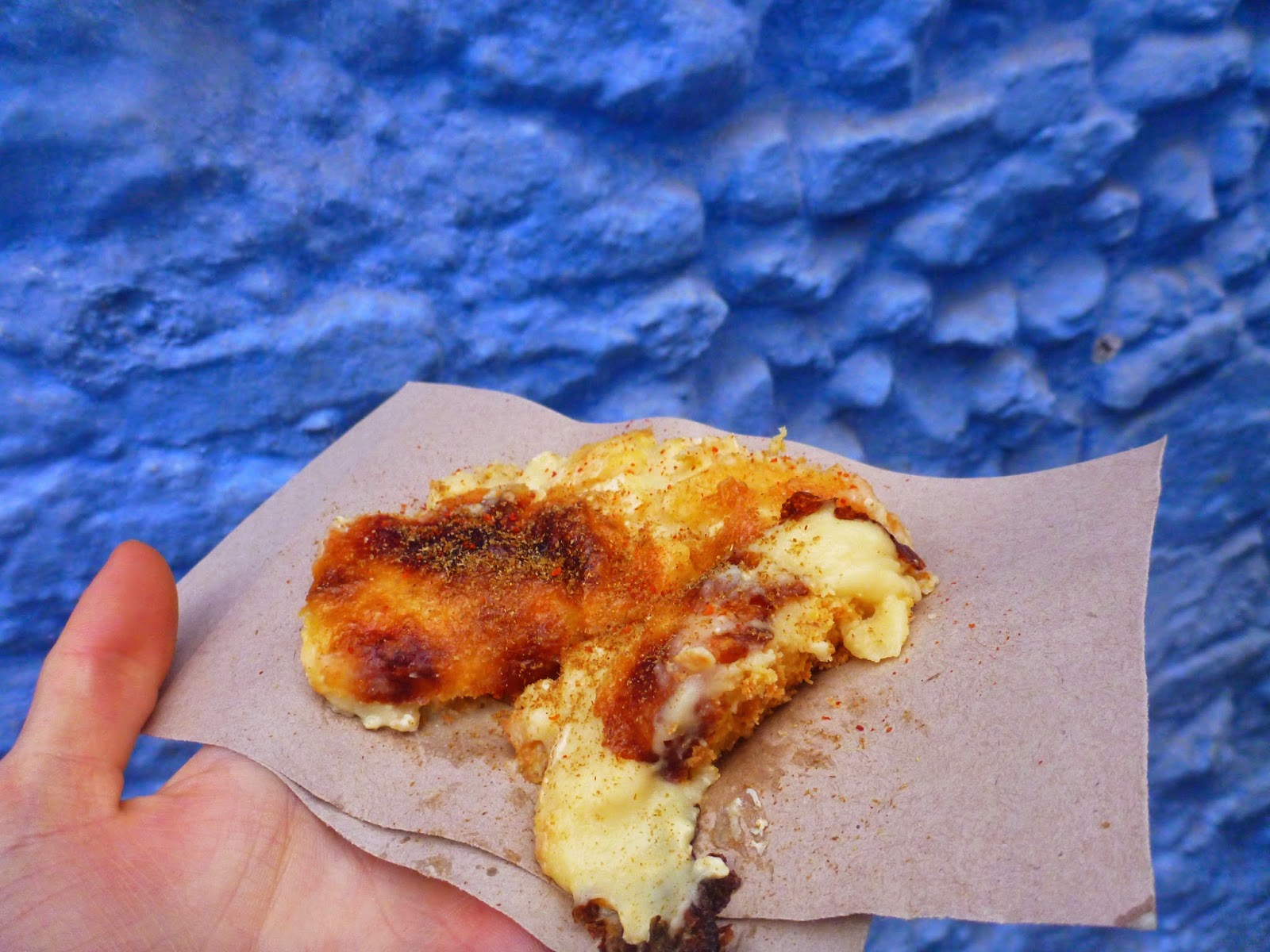
The kalenti – my favorite snack in Tangier, a mixture of chickpea flour, oil, and eggs – is even better here, and there is also grilled corn on the cob and snails. I tried the snails, served with a cup of hot, salty broth flavored with anise, but I can’t say I was a big fan. They were kind of chewy.

Much better was breakfast the next morning, some Moroccan cookies.


The green one was disappointing; it tasted like playdough (How do I know what playdough tastes like, you may wonder. I think we have all had that sad moment of realization that playdough does not taste as good as it looks.). The pink was delicious though, raspberry flavored almond paste. The diamond-shaped cookie had ground almonds and a sweet jam filling, and the swirly one with powdered sugar was like a peanut butter cookie.
And really, it was all good since I was sitting at a café with this view


Lunch on the way home was a carnivorous affair. My friends ordered two plates of kefta- grilled ground beef – and a heaping plate of sheep meat.

I tasted both, and they were delicious – the kefta was like a really good hamburger, and the sheep was piping hot, rich, and salty, perfect with the fresh bread that accompanied it. However, I have a hard time shaking five years of vegetarianism, and stuck with the classic Moroccan salad.

Meanwhile, the daily delivery arrived – a dozen whole ram carcasses, brought in two by two, slung over the shoulder of a young man in a white smock.

The rest of the drive back was lovely, and I would highly recommend a trip to Chaoen for anyone visiting Morocco.